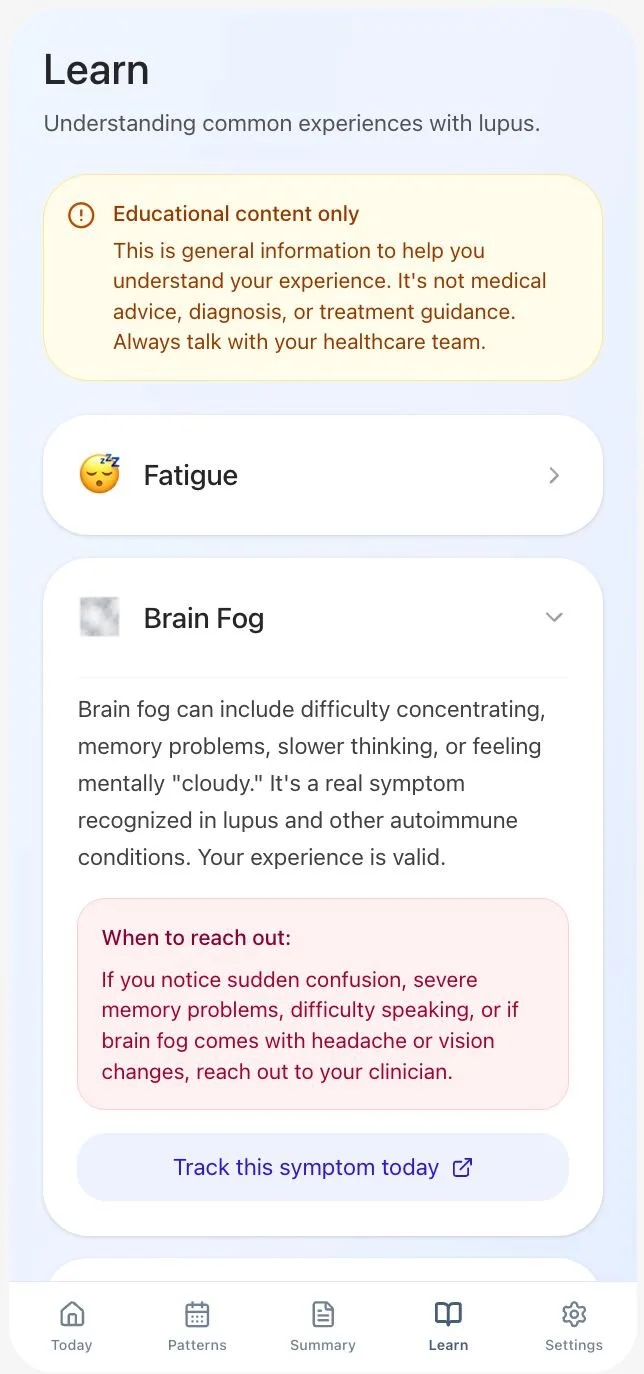
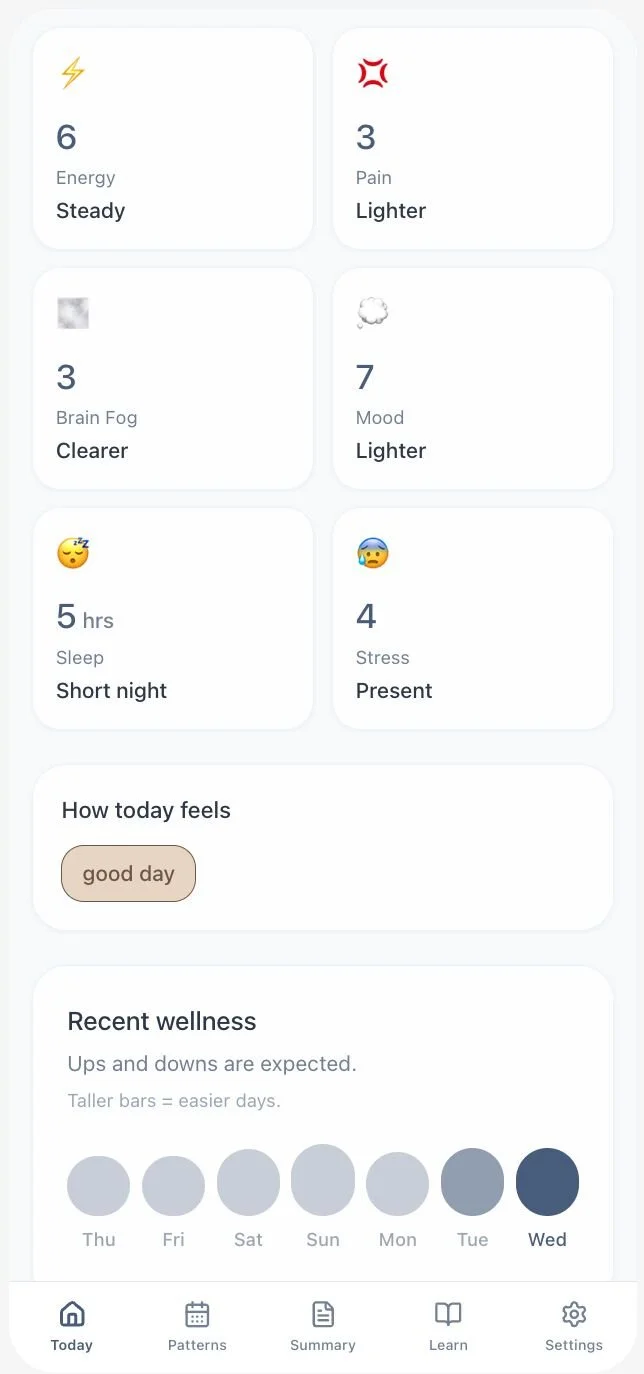
This project began as a personal exploration of how autoimmune disease is experienced, not just treated.
Someone very close to me has lupus, and over time I saw how managing autoimmune disease often feels like detective work. Symptoms fluctuate daily, don’t map cleanly to labs, and much of the lived experience happens between appointments. The hardest parts are often invisible: low-energy days, quiet symptoms, and the burden of repeatedly explaining how you feel.
I built this prototype to explore what a consumer-first, empathetic support tool for lupus could look like if it were designed around lived experience rather than clinical snapshots.
The goal was to create a lightweight companion that:
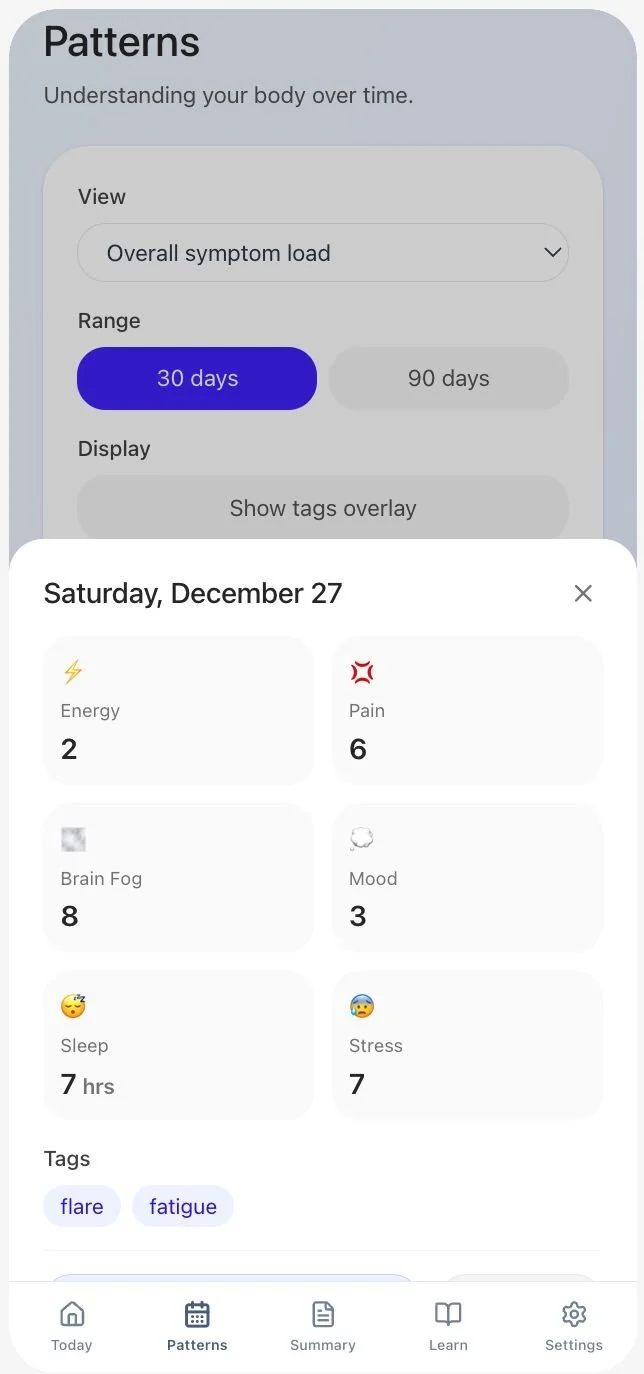
Captures daily symptom signals with minimal friction
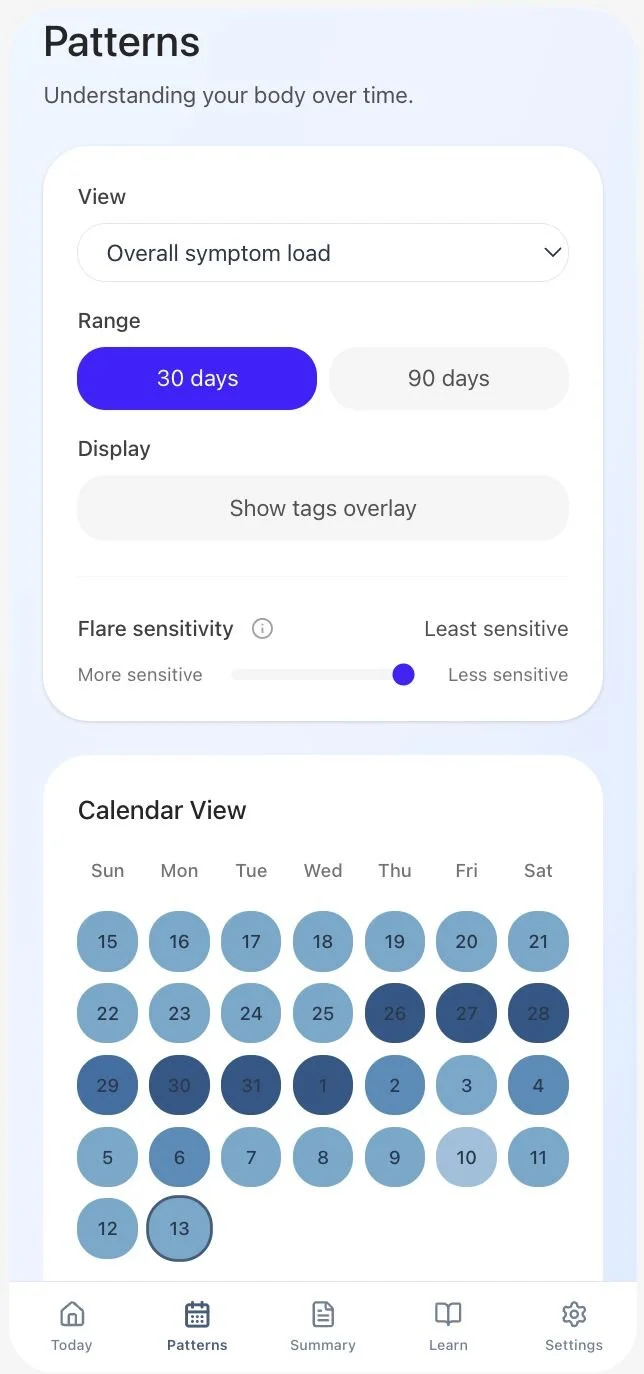
Surfaces short-term patterns instead of isolated data points
Respects low-energy days through state-aware, non-gamified UI
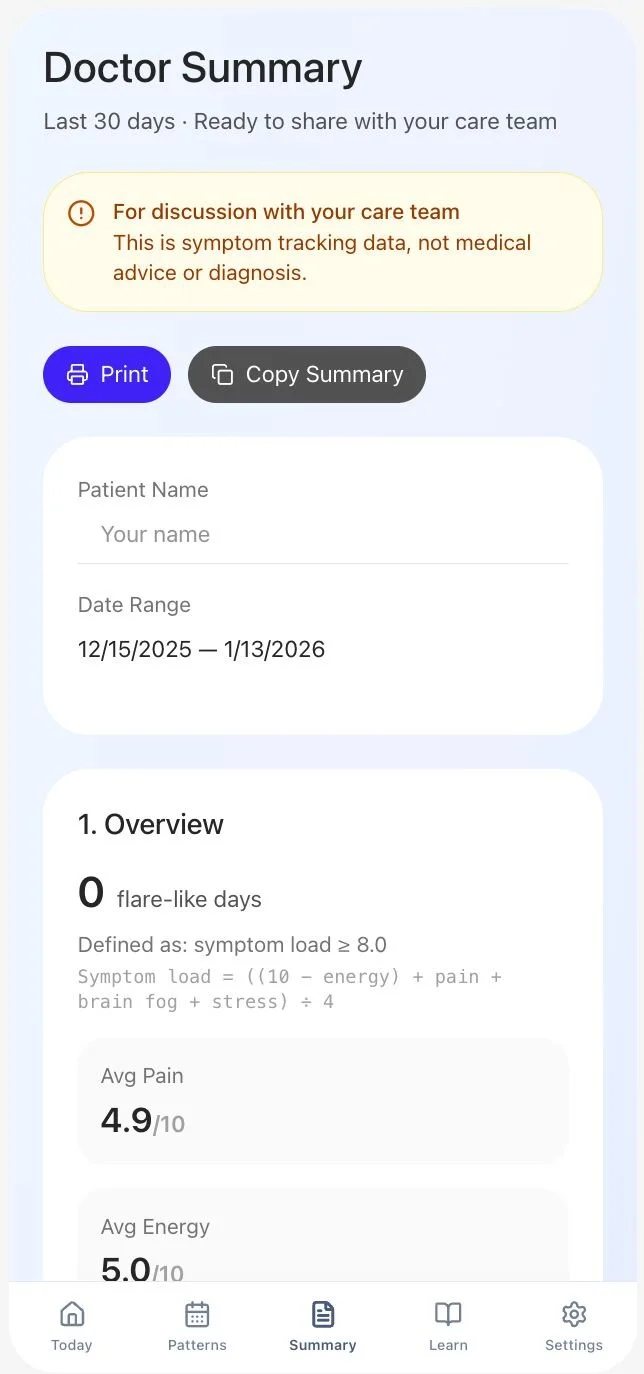
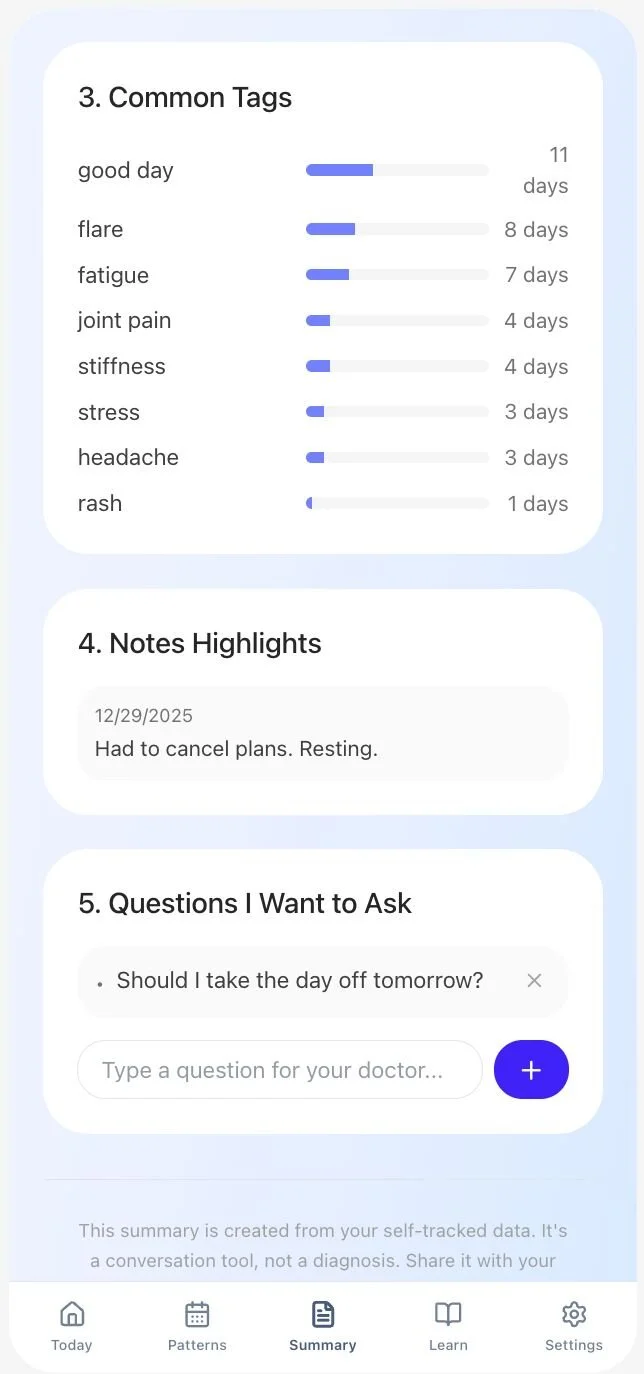
Translates lived experience into something clinicians can actually review
This was intentionally not a polished medical product. It’s an exploration of interaction patterns, softer data visualization, and how autoimmune care could feel more supportive and less burdensome.
Looking Ahead…
A future direction I’m particularly interested in is early flare anticipation. By combining lightweight symptom logging with passive signals (e.g., sleep debt, temperature trends, HRV), the system could detect subtle changes before a flare fully breaks through. Even a 12–24 hour heads-up could help someone rest earlier, adjust activity or medication, or proactively loop in their care team—shifting care from reactive to anticipatory.
Tools & Tech Stack That I Used:
Design & Prototyping: Figma (rapid iteration, interaction exploration)
Build Approach: Vibe coding for fast, exploratory front-end development
Focus Areas: Consumer UX, state-aware UI, low-friction data capture
Data Concepts (Exploratory): Symptom logging, pattern visualization, passive health signals
Intent: Concept validation and UX exploration (not a clinical-grade system)
My First Vibe Code: An App for People with Auto Immune Diseases